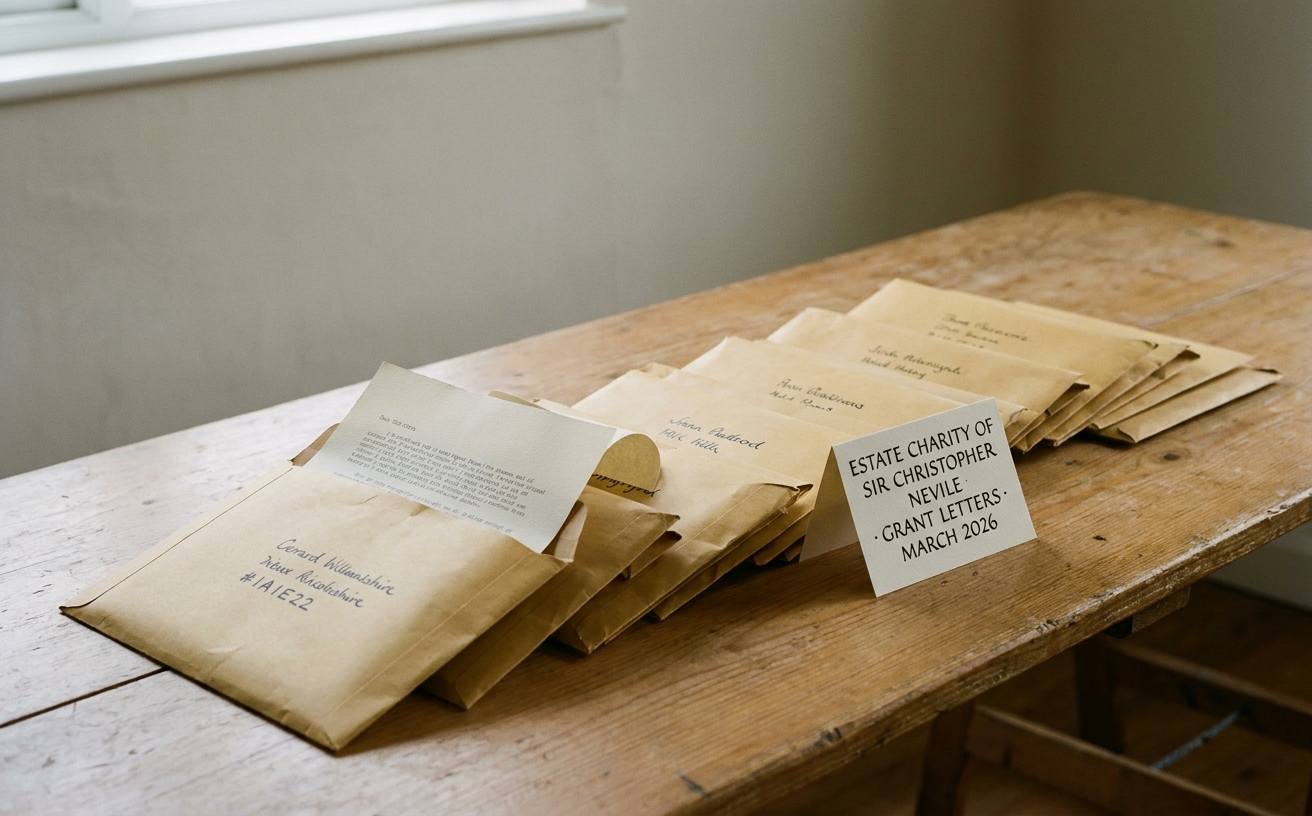
Four small purses, four very different needs.
All four programmes pay grants to individuals; none of them runs a service. Each is restricted to the parish of Aubourn with Haddington and its immediate neighbours, in keeping with the original donors' intentions.
Kitchen-Table Grants
Grants of £40–£250 · same-week decisions · paid direct to the household or to a named supplier
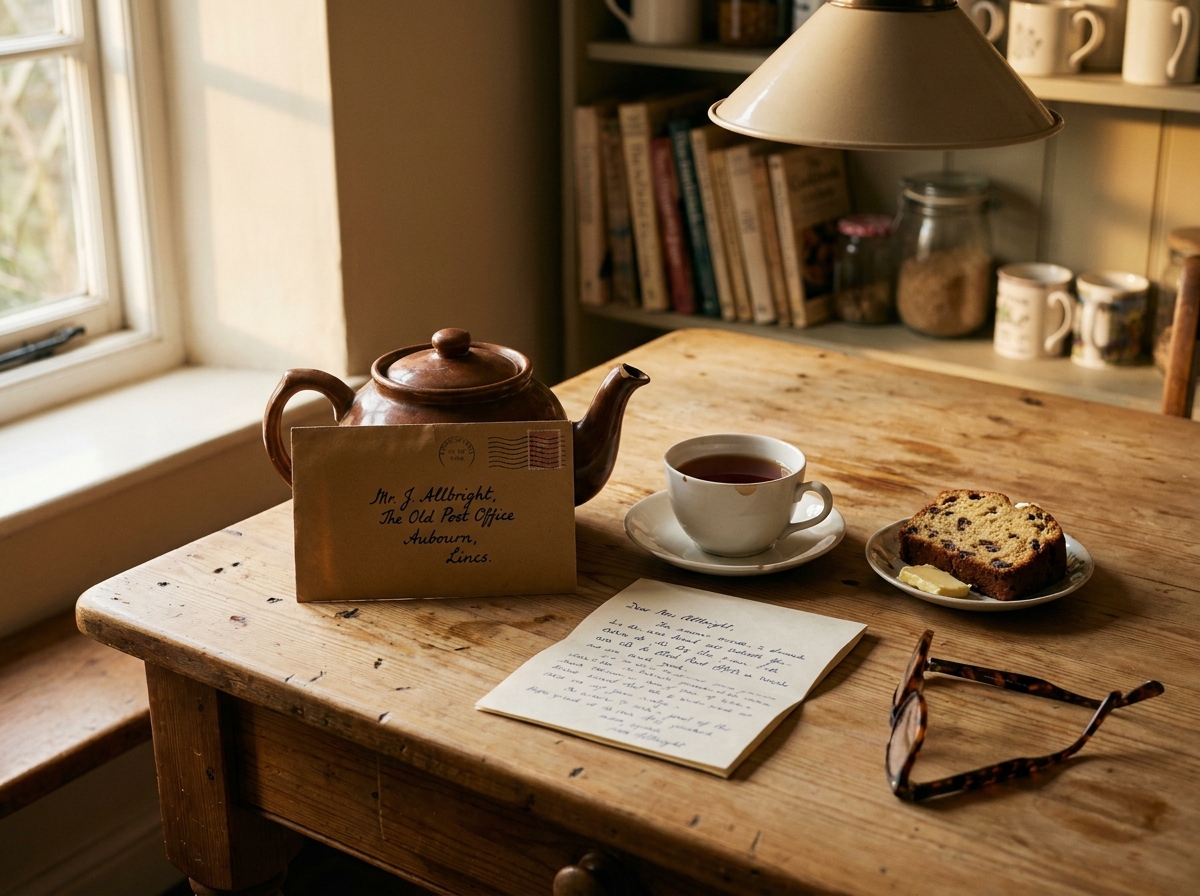
Kitchen-Table Grants are the heart of what we do. When a household in the parish faces a sudden, unforeseen cost — a broken cooker the week before half-term, a vet bill for a working dog, a funeral contribution after a sudden death, a bus fare to a hospital appointment in Lincoln — we can move quickly and quietly.
A request comes via a churchwarden, a community nurse, a head teacher, the village hall committee, a parish councillor, the licensee of the Royal Oak, or directly from the household. The Chair and one other trustee can approve a grant of up to £250 between meetings. We pay by bank transfer the same week, or we pay a named supplier on the household's behalf and write a short note. We do not require receipts unless the grant is above £150.
Who we make these grants to
- Households in the ancient parish of Aubourn with Haddington and the immediate neighbouring parishes.
- People of any age, with a particular concern for families with a child under five, parishioners over sixty-five, and households with a disabled member.
- One grant per household per twelve-month period, ordinarily, except in clearly exceptional circumstances.
Supported by
The Kitchen-Table Grants are paid from the income of the Nevile fund, supplemented by reserves and by direct donations from old friends of Aubourn — including a small recurring contribution from the Lincolnshire Community Foundation's local hardship pool.
Read this year's Kitchen-Table dispatch for a candid breakdown of where the money went between November 2025 and March 2026.
The Summers Bursaries
Annual bursaries of £150–£400 · awarded each autumn · for tools, books, first kit and travel costs
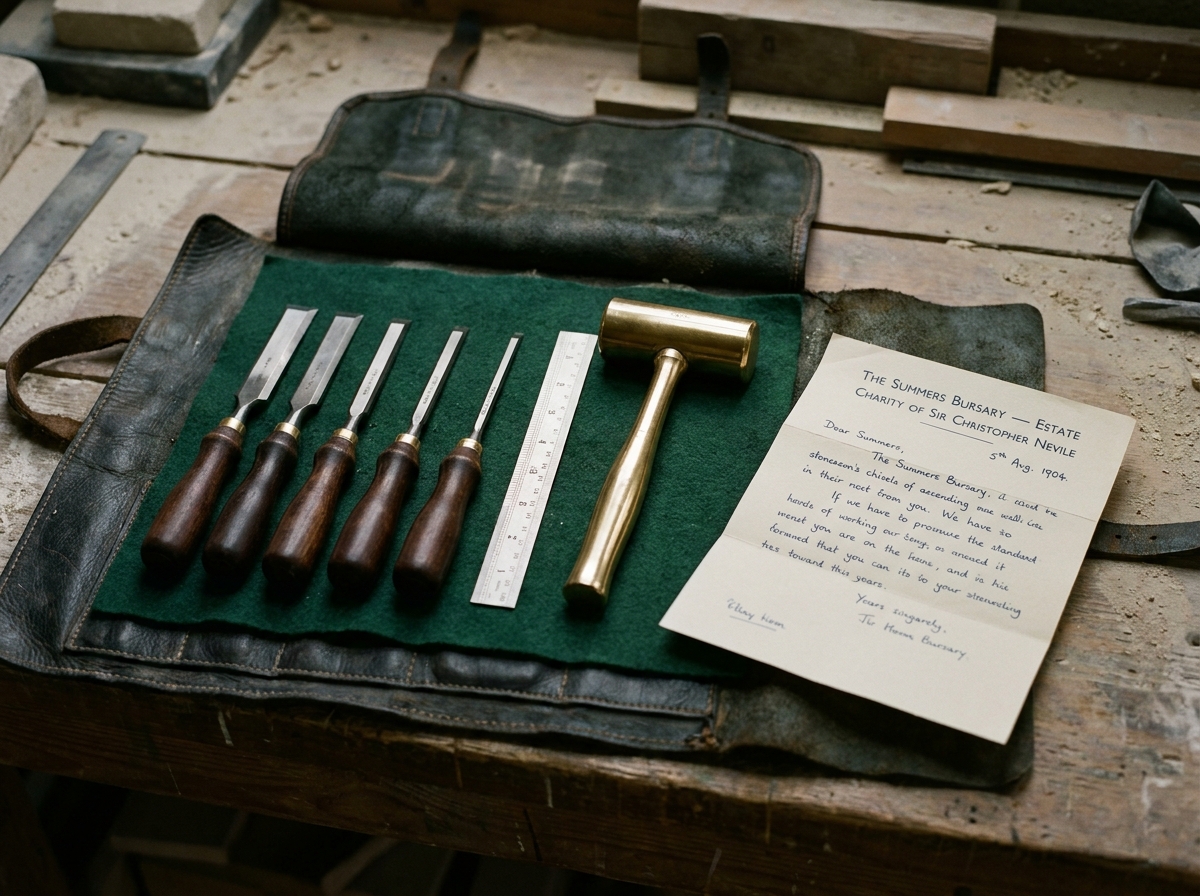
The Summers Bursaries are the only programme in the charity that is awarded by application rather than by knock at the door. Three to five bursaries are awarded each autumn to young people from the parish who are starting an apprenticeship, a further-education course, or who need help with the cost of first tools, books, a uniform, or travel to a new placement.
Applications open in early September and close at the end of October. Decisions are made at the December trustee meeting. Awards are paid in January, in time for the spring term or the new placement year.
Who we award these to
- Young people aged 16–25 who have lived in the parish of Aubourn with Haddington for at least two years, or who attended Aubourn Primary or one of the local secondaries.
- Apprentices, FE students, mature students returning to study, and young people taking up first paid work that needs personal tools or kit.
- One award per applicant in any three-year period.
Supported by
The Summers Bursaries are funded from the income of the Summers fund, which is restricted by the original donor's intention to this purpose. Julie Plackett-Smith, formerly a deputy head at a Lincolnshire secondary, leads on the programme and reads every application personally.
Read this spring's Summers letter for a short account of the bursaries awarded in 2025–26.
Quiet Hour
Small monthly grants towards companionship costs · not a service we deliver, a purse we open
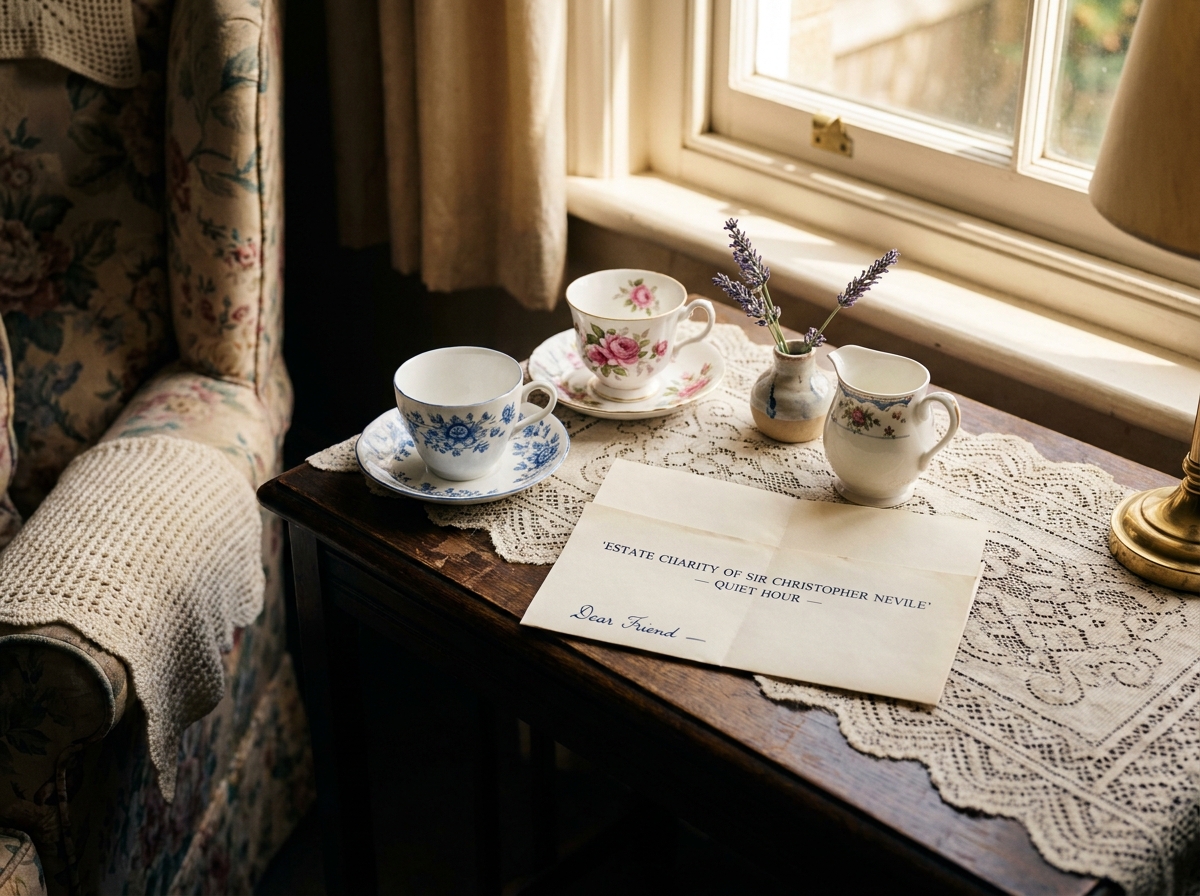
Quiet Hour is the smallest of our programmes by spend and the most particular by purpose. It pays modest monthly amounts towards companionship for older parishioners who live alone — a befriender's petrol money for a weekly visit, a taxi to the GP surgery in Witham St Hughs, a contribution towards a hairdresser's home call, a few pounds for the milk and biscuits.
We do not run a befriending service. The visits happen because someone in the parish — a neighbour, a member of the church congregation, a former colleague — is already going. We pay the costs that make those visits sustainable, particularly through the long winter months when travel is hardest and the days are shortest.
Who Quiet Hour helps
- Parishioners over the age of seventy who live alone in Aubourn with Haddington or the immediate neighbouring parishes.
- Particularly: those recovering from a stroke, a bereavement, or a hospital stay; and those whose family lives at a distance.
- Always at the suggestion of someone who already knows the household.
Supported by
Quiet Hour is run in close partnership with St Peter's parish church, Aubourn, the Aubourn with Haddington Parish Council, and Lincolnshire Community Voluntary Service's local befriending co-ordinators. Lynne Rocks convenes the programme.
Read 'Quiet Hour: walking back from the floods' for a note on how the programme changed shape after the February 2026 high water along the Witham.
The Parish Wellbeing Fund
Grants of up to £500 · towards mobility aids, sensory equipment and small home adaptations
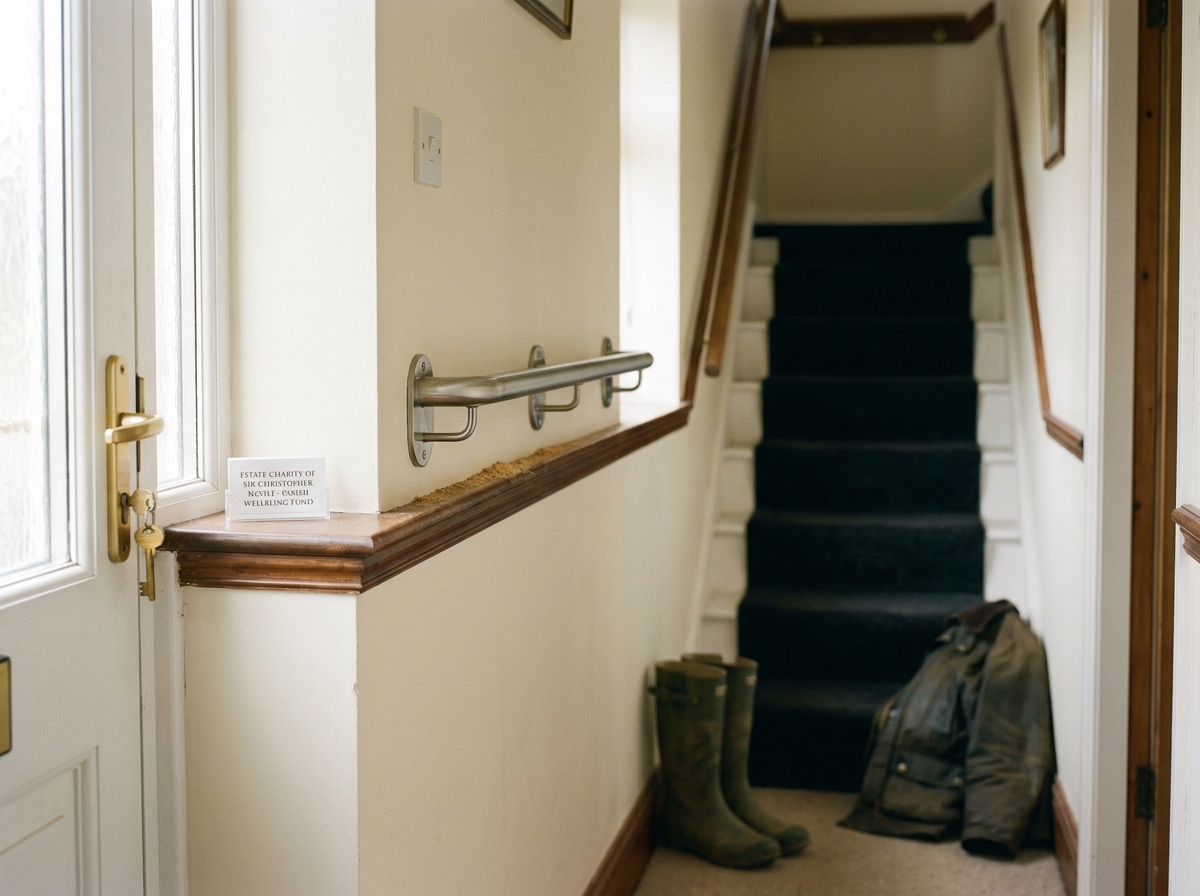
The Parish Wellbeing Fund pays towards mobility aids, sensory equipment and small home adaptations for parishioners living with disability or recovering from a serious illness. Typical grants pay for a grab-rail and its fitting, a kettle-tipper, a perching stool, a hearing-loop hire for a service at St Peter's, or a contribution towards a stair-light. Larger items are usually paid for jointly with social care or the British Red Cross local equipment service.
The fund also makes occasional small grants to the village hall — never to fix the building, which is the parish council's job, but to buy equipment that lets disabled parishioners use the hall properly: a portable hearing loop, a wheel-chair-accessible folding table, a set of large-print hymn books for the carol service.
Who the Wellbeing Fund helps
- Parishioners of any age living with a long-term disability, a sensory impairment, or recovering from a serious illness.
- Households where an adaptation makes the difference between staying at home and not.
- The village hall, where shared equipment benefits everyone.
Supported by
The Parish Wellbeing Fund is paid from general reserves and supplemented by a small annual contribution from the Aubourn with Haddington Parish Council's discretionary fund. Susan Stentiford, who joined the trustees in October 2023, leads on the programme.
There is no form. There is a kettle, and a kitchen table.
If you, or someone you know, live in the parish of Aubourn with Haddington (or one of the immediately surrounding parishes — see our FAQ for the full list) and you think one of our four programmes might be the right fit, please:
- Telephone or write to the Chair via [email protected], or leave a note through the letterbox at The Old Vicarage, Church Lane, Aubourn LN5 9DT.
- Come to a trustee surgery — the first Saturday of the month, 10.00 to 12.00, at Aubourn Village Hall. The kettle is always on.
- If a churchwarden, a head teacher, a community nurse or a parish councillor is already involved, please feel free to ask them to write to us on your behalf.
We try to reply to every enquiry within seven days. For something urgent — a boiler on a Sunday, a funeral on a Wednesday — please mark the letter or email urgent and a trustee will telephone you. Two trustees can approve up to £250 between meetings.
Help us reach twelve more households this winter.
The Winter Fund 2026 is 61% raised. A further £1,360 closes the gap.